


Learn about congenital hearing loss (from birth), including causes, early detection, diagnosis, treatment options, and how early intervention supports development.
Congenital Hearing Loss (From Birth): Causes, Early Signs, Diagnosis & Treatment
Hearing is essential for language development, communication, learning, and social interaction. When hearing loss is present from birth, it is known as congenital hearing loss.Congenital Hearing Loss: Causes, Early Signs
Early awareness and intervention can dramatically improve outcomes for children born with hearing impairment. This guide provides a complete understanding of congenital hearing loss, its causes, early signs, diagnosis, and available treatments.
What is Congenital Hearing Loss?
Congenital hearing loss refers to a hearing impairment that is:
✔ Present at birth
✔ Detected during newborn screening or early childhood
✔ Ranging from mild to profound
✔ Affecting one or both ears
It may be temporary or permanent depending on the cause.
How Common is It?
Congenital hearing loss is one of the most common birth conditions worldwide.
📊 Approximately 1–3 per 1,000 newborns are born with some degree of hearing loss.
Early detection programs have improved identification rates significantly.Congenital Hearing Loss: Causes, Early Signs
Causes of Congenital Hearing Loss
Congenital hearing loss may result from genetic or non-genetic factors.
1️⃣ Genetic Causes
Genetic factors account for a large percentage of congenital hearing loss.
🔹 Inherited Conditions
- Autosomal dominant
- Autosomal recessive
- X-linked inheritance
🔹 Syndromic Hearing Loss
Associated with other conditions:
- Usher syndrome
- Waardenburg syndrome
- Pendred syndrome
🔹 Non-Syndromic Genetic Loss
Only hearing is affected.
2️⃣ Non-Genetic Causes


4
🔹 Infections During Pregnancy
- Rubella
- Cytomegalovirus (CMV)
- Toxoplasmosis
- Herpes
- Syphilis
🔹 Birth Complications
- Oxygen deprivation
- Premature birth
- Low birth weight
- NICU admission
🔹 Maternal Health Factors
- Diabetes
- Hypertension
- Medication exposure
🔹 Structural Ear Abnormalities
Malformation of outer, middle, or inner ear.
🔹 Unknown Causes
In some cases, the cause remains unidentified.
Types of Congenital Hearing Loss
✔ Sensorineural Hearing Loss
Damage to:
- Inner ear (cochlea)
- Auditory nerve
Often permanent.
✔ Conductive Hearing Loss
Issues in:
- Outer ear
- Middle ear
May be treatable.
✔ Mixed Hearing Loss
Combination of both.
Early Signs of Congenital Hearing Loss
Recognising symptoms early is critical.



4
👶 In Infants
⚠ No reaction to loud sounds
⚠ Not startled by noise
⚠ Lack of response to voice
⚠ Delayed babbling
⚠ Limited vocalisation
🧒 In Toddlers
⚠ Delayed speech development
⚠ Difficulty understanding instructions
⚠ Unclear pronunciation
⚠ Limited vocabulary growth
📌 Developmental Milestones
Typical milestones may be delayed without intervention.
Importance of Newborn Hearing Screening
Most hospitals now perform newborn hearing tests.
✔ Common Screening Methods
🔹 OAE (Otoacoustic Emissions)
Measures inner ear response.
🔹 AABR (Automated Auditory Brainstem Response)
Measures auditory nerve activity.
✔ Why Screening Matters
Early detection enables:
✔ Early treatment
✔ Speech development support
✔ Better cognitive outcomes
✔ Improved communication skills
Diagnosis & Evaluation
If screening suggests hearing loss:


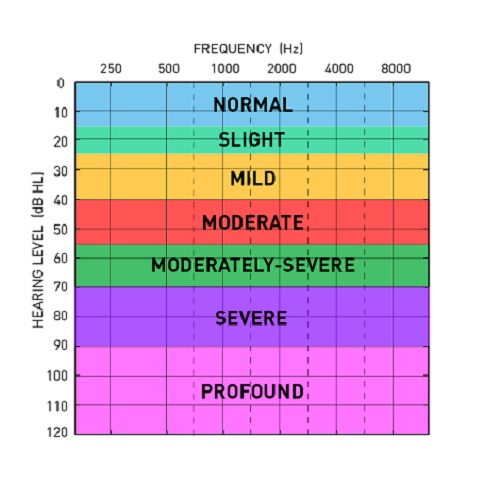
4
✔ Comprehensive Hearing Tests
- Diagnostic ABR
- Behavioral audiometry
- Tympanometry
- Imaging (if needed)
✔ Medical Examination
ENT evaluation for structural or medical causes.
✔ Genetic Testing
In some cases.
Impact on Child Development
Untreated congenital hearing loss may affect:
🔹 Speech & Language Development
Delayed vocabulary and pronunciation.
🔹 Learning & Education
Difficulty following classroom instructions.
🔹 Social Skills
Challenges in peer interaction.
🔹 Emotional Well-being
Frustration, withdrawal, reduced confidence.
🔹 Cognitive Development
Increased brain strain without auditory input.
Treatment Options
Early treatment leads to excellent outcomes.
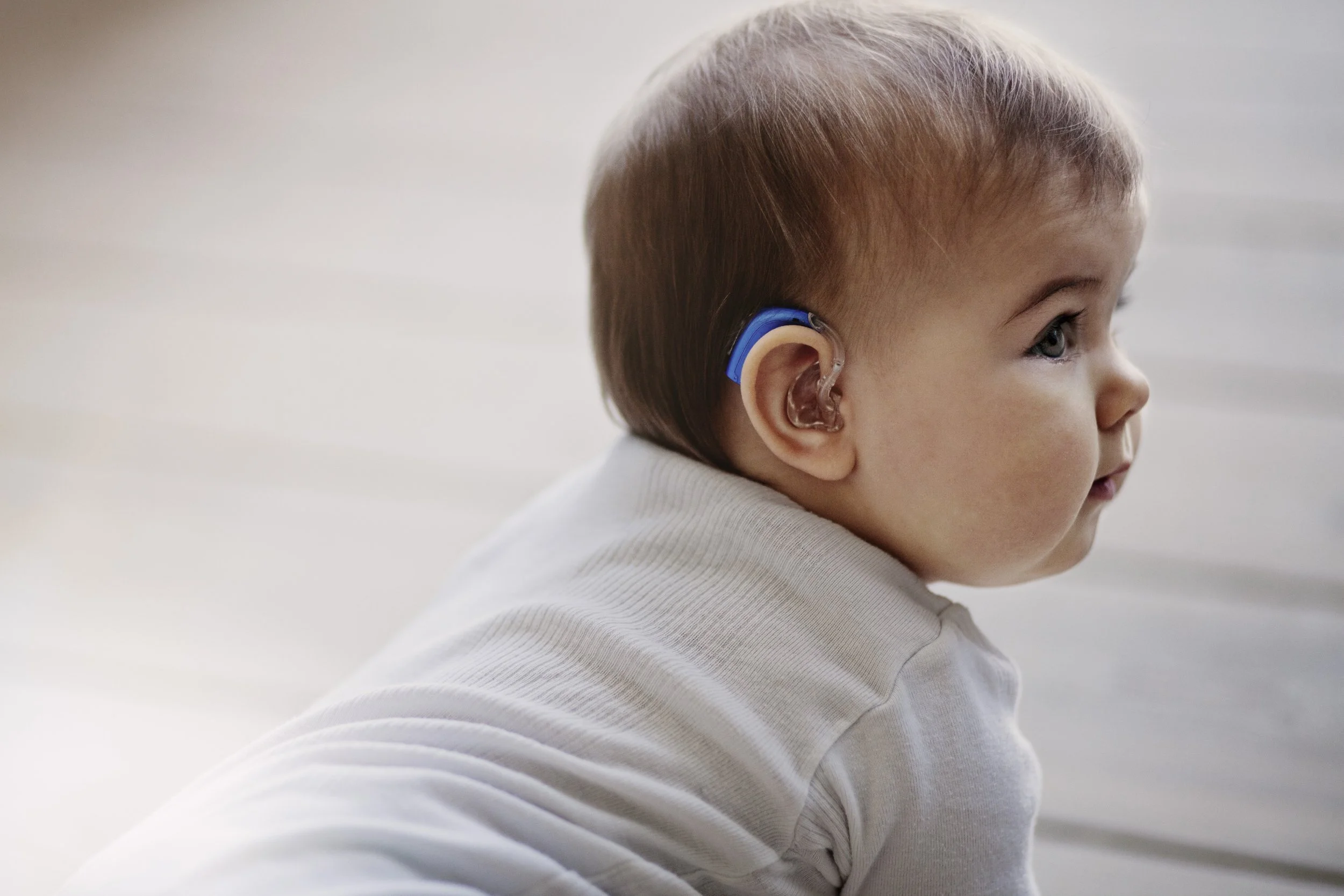
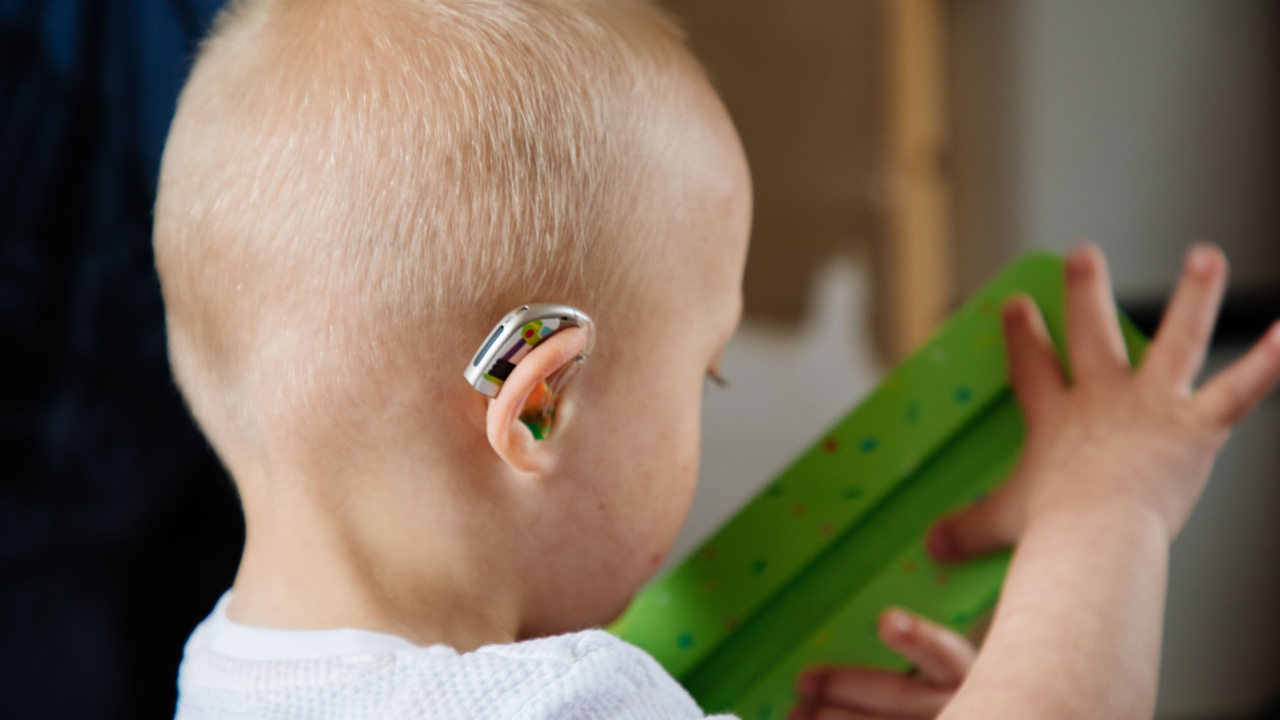
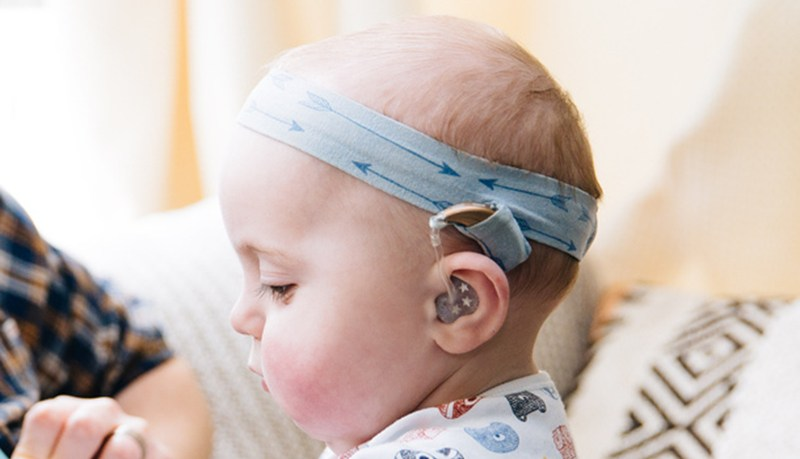
1️⃣ Hearing Aids
4
Amplify sound for usable hearing.
✔ Suitable for mild to severe loss
✔ Pediatric-friendly designs
✔ Early fitting recommended
2️⃣ Cochlear Implants
For severe/profound loss.
✔ Surgically implanted
✔ Bypass damaged cochlea
✔ Provide sound perception
3️⃣ Bone Conduction Devices
For conductive issues.
4️⃣ Medical / Surgical Treatment
For infections or structural problems.
5️⃣ Speech & Language Therapy
Essential for:
✔ Pronunciation
✔ Language development
✔ Communication skills
6️⃣ Auditory-Verbal Therapy (AVT)
Develop listening & spoken language.