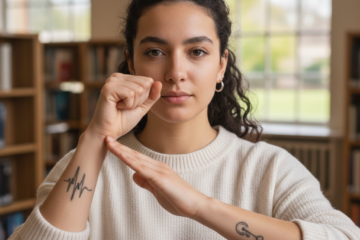

Deaf mute” ek popular search term hai, lekin modern aur respectful terminology me hum “deaf and non-speaking” ya “deaf with speech impairment” bolna prefer karte hain. Yeh detailed guide aapko deeper understanding dega — medical, social, psychological, educational, aur practical aspects ke saath.Deaf with speech impairment
1️⃣ Deafness vs Mutism – Clear Difference
Deafness (Hearing Loss)
- Sunne ki ability partial ya complete loss
- Causes: genetic, infection, injury, aging
Mutism (Speech Impairment)
- Bolkar communicate na kar pana
- Causes: neurological, muscular, psychological
👉 Important:
Deaf hona ≠ Mute hona
Bahut deaf individuals bol sakte hain.Deaf with speech impairment
2️⃣ Types of Hearing Loss
✔ Conductive Hearing Loss
- Outer/middle ear issue
- Often medically treatable
✔ Sensorineural Hearing Loss
- Inner ear/auditory nerve damage
- Permanent in many cases
✔ Mixed Hearing Loss
- Combination of both
✔ Central Hearing Loss
- Brain processing difficulty
Severity levels:
- Mild
- Moderate
- Severe
- Profound
Speech & communication par impact severity par depend karta hai.
3️⃣ Why Speech May Not Develop
Speech learning ke liye zaroori:
👂 Hearing sounds
🔁 Feedback correction
Agar child sounds nahi sunta:
- Words imitate nahi kar pata
- Pronunciation unclear
- Language delay
Early therapy se improvement possible.
4️⃣ Language Development in Deaf Individuals
Scenario A: Early Diagnosis + Support
✔ Sign language exposure
✔ Speech therapy
✔ Assistive devices
➡ Better language & cognitive development
Scenario B: Late Diagnosis
❗ Speech delay
❗ Learning difficulty
❗ Frustration
➡ Early detection is crucial
5️⃣ Communication Methods – Expanded View


5
✔ Sign Language
- Visual language with grammar
- Uses hand shapes + facial expressions
Benefits:
✔ Natural & expressive
✔ Fast communication
✔ Lip Reading
- Mouth movements observe karna
- Accuracy limited (30–40% typical)
✔ Total Communication
Combination of:
✔ Sign
✔ Speech
✔ Gestures
✔ Writing
✔ Written / Digital Communication
📱 Chat
💻 Email
📝 Notes
✔ Assistive Technology
- Hearing aids
- Cochlear implants
- Captioning apps
- Speech-generating devices
6️⃣ Psychological & Emotional Dimensions
Challenges:
- Communication stress
- Social misunderstanding
- Self-confidence issues
Possible feelings:
😞 Isolation
😣 Frustration
😟 Anxiety
Supportive environment:
❤️ Boosts confidence
❤️ Encourages independence
7️⃣ Social Barriers
🔹 Attitudinal Barriers
❌ “They can’t understand” myth
❌ Pity instead of respect
🔹 Environmental Barriers
❌ No captions
❌ No interpreters
❌ No visual alerts
🔹 Communication Barriers
❌ People sign language nahi jaante
8️⃣ Education Challenges & Solutions
Problems
- Lecture-based teaching
- Lack of interpreters
- Audio-heavy material
Solutions
✔ Sign language interpreters
✔ Captioned videos
✔ Visual teaching aids
✔ Inclusive classrooms
9️⃣ Employment Challenges & Inclusion
Common Issues
❌ Interview communication
❌ Meetings accessibility
❌ Workplace bias
Inclusive Practices
✔ Written communication channels
✔ Captioned meetings
✔ Visual alerts
✔ Diversity policies
🔟 Healthcare Accessibility
Problems:
❌ Doctor-patient communication
❌ Misdiagnosis risk
Solutions:
✔ Sign interpreters
✔ Written instructions
✔ Visual explanation tools
1️⃣1️⃣ Legal & Human Rights
Most countries me disability laws ensure:
⚖ Equal education
⚖ Workplace rights
⚖ Accessibility
⚖ Non-discrimination
Awareness empowers individuals.
1️⃣2️⃣ Role of Family
Family support = foundation
✔ Acceptance
✔ Sign language learning
✔ Emotional encouragement
✔ Therapy & education support
1️⃣3️⃣ Assistive Devices Explained
🎧 Hearing Aids
- Amplify sound
- Useful in residual hearing
🧠 Cochlear Implants
- Electronic device
- Converts sound → nerve signals
📺 Captioning Tools
- Real-time speech → text
📱 Communication Apps
- Speech-to-text
- Text-to-speech
1️⃣4️⃣ Myths vs Reality (Advanced)
❌ Deaf people live dependent lives
✅ Many live fully independent lives
❌ Deafness = inability
✅ Deafness = different communication mode
❌ Sign language limits growth
✅ Bilingual (sign + written/spoken) improves cognition
1️⃣5️⃣ How to Communicate Respectfully
✔ Face visibility
✔ Good lighting
✔ Normal tone
✔ Use gestures/writing
✔ Confirm understanding
Avoid:
❌ Turning away
❌ Exaggerated shouting
❌ Speaking too fast
1️⃣6️⃣ Inclusion Strategies for Society
✔ Accessibility First
- Captions
- Interpreters
- Visual alerts
✔ Awareness Programs
✔ Sign Language Promotion
✔ Respectful Language
1️⃣7️⃣ Strengths & Abilities
Deaf individuals often show:
✔ Strong visual perception
✔ Attention to detail
✔ Spatial awareness
✔ Creativity
1️⃣8️⃣ Identity & Culture
Deaf community ek rich culture rakhti hai:
🤟 Unique language
🎭 Shared experiences
🌍 Strong social bonds
Deafness is not just medical — it’s also cultural.
1️⃣9️⃣ Technology & Future
Emerging innovations:
🚀 AI live translation
📱 Smart caption glasses
🎧 Advanced implants
🌐 Better accessibility tools
2️⃣0️⃣ Key Takeaways
✅ Deaf mute term outdated but searchable
✅ Deaf ≠ Mute
✅ Communication differences ≠ Intelligence issues
✅ Early intervention life-changing
✅ Inclusion removes barriers